
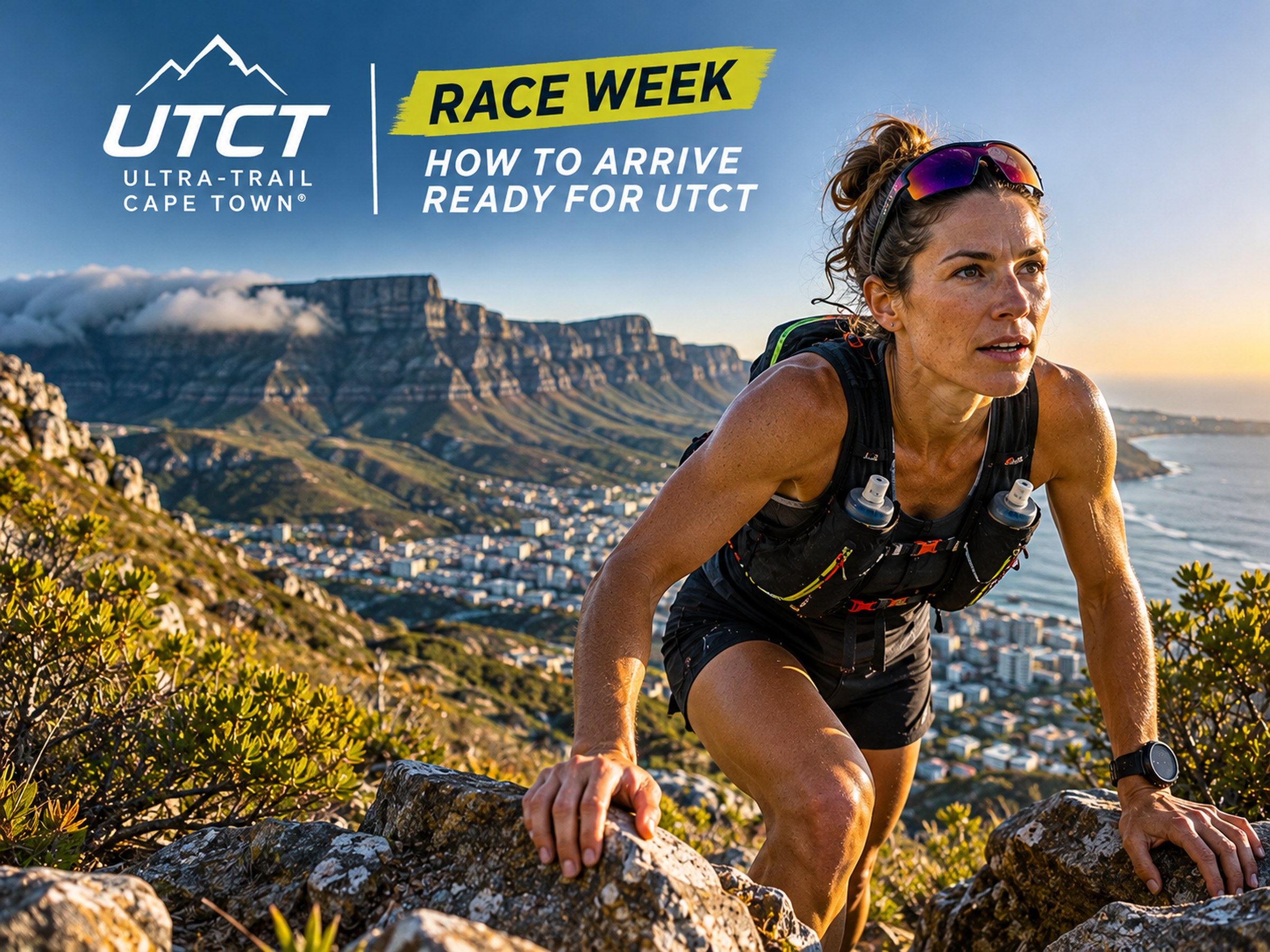
RMB Ultra-trail Cape Town (UTCT) takes place from 20–22 November 2026, bringing runners onto some of the Cape Peninsula’s most demanding mountain trails. With distances from 16km to 100 miles, the event offers very different challenges—but all runners need to respect the terrain, weather and demands of mountain running.
For athletes in the final weeks of preparation, the priority is not to squeeze in extra fitness. It is to arrive healthy, rested, equipped and ready to make sensible decisions on the trail.
Understand the course you have entered
UTCT is not a single race distance. The 2026 programme includes the 16km Kickstarter, 23km Explorer, 35km Table Mountain, 55km Peninsula Traverse, 100km UT100 and 100-mile UTCT.
The demands vary substantially. The UT100 is a technical, front-loaded route with major climbs on Table Mountain and Karbonkelberg in its first half, and approximately 5,000m of elevation gain. The 100-mile race crosses a much wider section of the peninsula and includes more than 7,000m of climbing.
Before race week, review the official route information for your event. Understand the major climbs, technical descents, aid-station locations, cut-offs and mandatory equipment. Distance alone is a poor guide to how difficult a mountain race will feel.
The final two weeks: protect the fitness you have built
The taper should reduce accumulated fatigue while retaining enough familiar training to feel prepared. It is not the time to compensate for missed sessions with a sudden increase in volume or intensity.
The right taper depends on the athlete, event distance, training history and current fatigue. In general:
– Reduce overall training load progressively as race day approaches.
– Keep some short, familiar efforts if they are part of your established plan.
– Avoid hard sessions that create lingering soreness or fatigue.
– Do not introduce unfamiliar strength work, shoes, nutrition products or training methods.
– Prioritise sleep, routine and recovery.
There is no universal taper formula for every UTCT distance. A 16km participant and a 100-mile runner have different training histories and recovery needs. Follow your coach’s plan rather than copying another athlete’s schedule.
Keep the terrain familiar
Technical trail running requires more than aerobic fitness. Foot placement, downhill control, climbing rhythm and decision-making become increasingly important when fatigue sets in.
If your training plan includes a final trail session, keep it controlled and familiar. Use it to reinforce confidence and movement skills—not to prove fitness or chase a segment.
Avoid last-minute attempts to recreate the race’s biggest climb or longest training day. The risk of arriving fatigued or injured is rarely worth the potential benefit.
Prepare for Cape Town’s changing conditions
UTCT’s official event information warns that conditions can vary sharply, even in late November. Early-morning mountain temperatures may be very cold, while later parts of the day can become hot.
That means runners should prepare for a range of conditions rather than assuming a summer event will be warm throughout.
Check the organiser’s latest weather and race communications as the event approaches. Make sure your clothing and mandatory kit meet the event rules and are appropriate for the forecast. For longer races, be prepared for temperature changes, wind, exposure and the possibility of spending many hours on the mountain.
Mandatory equipment is a safety requirement, not a checklist to minimise. Familiarise yourself with every item and know how to use it before race day.
Rehearse your fuelling and hydration plan
Race week is not the time to experiment with a new gel, drink mix or hydration strategy.
Use the approach you have practised during training and adapt it to the expected duration, intensity, terrain and aid-station access. Longer events may require a plan that accounts for changing pace, fatigue and opportunities to refill or collect supplies.
Avoid assuming that another runner’s fuelling plan will work for you. Tolerance, preferences and requirements differ, and the conditions can change how practical a strategy feels.
If you have a history of gastrointestinal problems, medical concerns or difficulty fuelling during long events, seek individual guidance from an appropriately qualified professional or your coach.
Plan the logistics before you travel
Race-week stress can consume energy and attention that should be reserved for preparation.
Before leaving home, confirm:
– Registration and race briefing requirements
– Your start time and start location
– Transport, parking and accommodation arrangements
– Drop-bag rules and deadlines, where applicable
– Mandatory kit and any event-specific checks
– The route, cut-offs and aid-station information
– A simple post-race recovery and transport plan
The official UTCT schedule lists registration and expo activities at the V&A Waterfront, while race starts and finishes vary by distance. Do not assume all races begin at the same venue or time.
Race-day decisions: effort before ego
Mountain races reward patience and sound judgement. A controlled start, deliberate climbing and careful descending can help preserve energy for later sections.
Conditions, fatigue and terrain may require you to adjust your plan. Be prepared to slow down, eat or drink, add clothing, or seek assistance when necessary. A pace target should never take priority over safety.
Follow event rules and instructions from race officials. If you become unwell, injured, disoriented or concerned about conditions, use the event’s established assistance procedures rather than pressing on at all costs.
The MCC coaching perspective
The final weeks before a major trail event are about execution, not last-minute transformation.
The athlete who arrives with a sensible taper, familiar fuelling, appropriate kit and a clear understanding of the course is better positioned to make good decisions than the athlete who tries to cram in extra training.
UTCT is a mountain-running challenge. Respect the elevation, technical terrain and changing conditions—and make preparation specific to the distance you have chosen.
Athlete takeaway: in the final fortnight, protect your fitness, rehearse the basics, check the official race information and arrive ready to adapt. The goal is to start healthy and make sound decisions all the way to the finish.
Official race information
– UTCT official website: https://www.ultratrailcapetown.com/
– Race-week schedule: https://www.ultratrailcapetown.com/schedule
– UT100 route: https://www.ultratrailcapetown.com/ut100
– UTCT 100-mile route: https://www.ultratrailcapetown.com/100miles
Source:
Official RMB Ultra-Trail Cape Town website and race information: https://www.ultratrailcapetown.com/ .