
Athletes are surrounded by ways to measure readiness: heart-rate variability, resting heart rate, sleep scores, subjective questionnaires, power data and increasingly simple physical tests.
More measurement does not automatically mean better coaching.
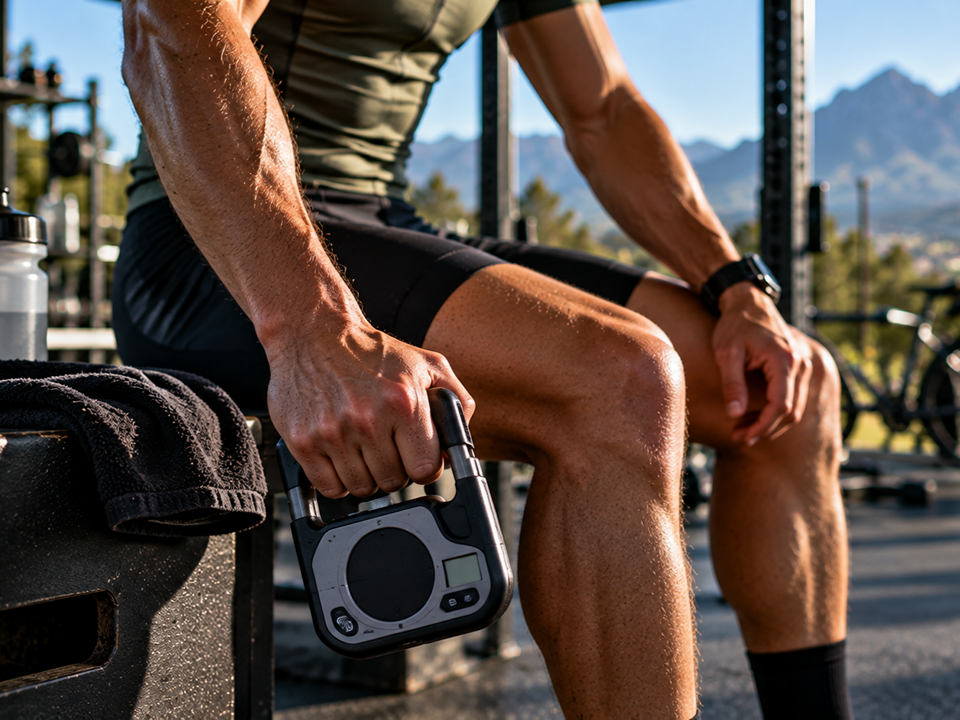
A new exploratory study in trained cyclists looked at whether handgrip strength could act as a quick marker of fatigue and readiness. The result is useful precisely because it was not a simple success story: handgrip strength showed some relationships with performance, but day-to-day changes in grip strength did not reliably track changes in acute readiness.
That is a valuable coaching lesson.
A readiness test must earn its place
A useful readiness measure should help answer a practical question.
If an athlete’s training plan calls for a demanding session, the coach may want to know whether the athlete appears ready to absorb it. A readiness measure could contribute to that decision—but only if it adds information that cannot be obtained more simply from the athlete’s recent training, performance and subjective state.
A number that looks objective is not automatically more useful than an athlete saying, “I feel unusually flat today.”
The handgrip study
The 2026 study followed 22 trained male cyclists through different exercise conditions, including rest, easy training, high-intensity training and long-duration exercise.
Handgrip strength measured at one elbow position changed across conditions, and higher grip strength was associated with greater short-duration cycling power. However, the researchers found that day-to-day fluctuations in grip strength were not associated with corresponding changes in performance or several other markers of fatigue and recovery.
The authors therefore did not support handgrip strength as an independent acute-readiness marker.
That does not make the measurement useless. It simply defines its limits.
Context beats a single score
Readiness is a moving target.
An athlete may have poor sleep but still produce a good session. Another may report feeling fine but struggle when intensity rises. Training load, nutrition, life stress, illness, travel and accumulated fatigue can all influence the athlete’s response.
This is why readiness should be interpreted as a pattern rather than a single threshold.
A coach might combine subjective feedback, recent TrainingPeaks data, sleep and recovery information, recent session performance and—where appropriate—a simple physical measure.
The purpose is not to create a more complicated dashboard.
It is to make a better decision.
What should change when the signal is poor?
This is the most important question.
If a readiness measure says an athlete is not ready, what action follows? Reduce intensity? Shorten the session? Change the objective? Keep the session but monitor response?
If the answer is “nothing,” the test probably does not belong in the workflow.
The same principle applies when the result is positive. A good readiness score should not give an athlete permission to ignore pain, excessive fatigue or obvious signs that the planned session is inappropriate.
The MCC coaching perspective
Readiness monitoring should remain subordinate to coaching judgement.
Use simple measures when they provide useful information, establish what a measure is actually capable of detecting, and avoid turning a single score into a traffic-light decision without context.
The handgrip study is a good example of why this matters. A measure can correlate with performance characteristics without being a reliable day-to-day readiness tool.
Athlete takeaway: the best readiness test is not the one that produces the most data. It is the one that adds useful information and changes a sensible training decision.
Source:
Gotti D, Codella R, Moraschini M, Meloni A, La Torre A, Filipas L. 2026. Exploratory Associations Between Handgrip Strength, Fatigue State, and Cycling Performance in Trained Cyclists. Sports 14(10):423. DOI: 10.3390/sports14100423. Published 1 October 2026. https://www.mdpi.com/2075-4663/14/10/423